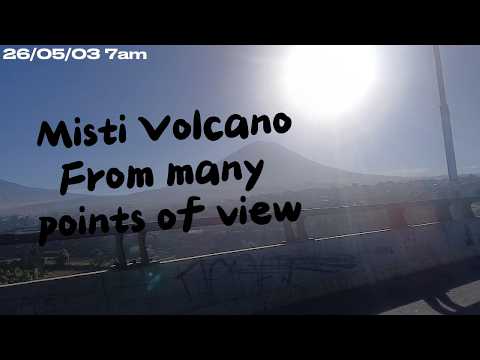
Misti Volcano: The Unbreakable Spirit of Arequipa
The Misti volcano is far more than a geographical landmark; it is the beating heart and ultimate symbol of Arequipa. Its imposing presence forged the very character of the people who live beneath it—strong, fiercely resilient, and unbreakable.
There is a famous phrase coined by Jorge Polar Vargas in 1891: “No en vano se nace al pie de un volcán” (You are not born at the foot of a volcano in vain). But to truly understand the fearless nature of an Arequipeño, one must read the complete, roaring quote:
“The land of Arequipa—rough, broken, granitic, shaken every day by subterranean convulsions, built to resist the onslaught of the planet’s inner fire that violently shakes it—gives its children the daily spectacle of struggle. It makes them passionate for combat, prone to explosion. You are not born at the foot of a volcano in vain.”
This sentiment is forever etched into the volcanic sillar stone of the city. In the main square of Yanahuara, upon the fifth arch, a proud declaration stands tall:
“FOR YEARS AREQUIPA HAS FOUGHT BRAVELY TO CONQUER FREE INSTITUTIONS FOR THE FATHERLAND. YOU ARE NOT BORN AT THE FOOT OF A VOLCANO IN VAIN.”
Because of this volcanic temperament, Arequipa has always been the crucible where movements begin. It is a land of profound contrasts—a “Yin and Yang” that has birthed some of the most brilliant minds who built Peru, as well as destructive forces that brought it to its knees.
The Good and Bad of Arequipa: Forgers of History
Arequipa’s fiery energy has shaped figures who changed the course of the nation, for better or for worse.
The Light (The Builders & Visionaries)
- Mario Vargas Llosa: A Nobel Prize-winning author and intellectual titan whose literary genius and political courage modernized Peruvian thought on a global stage.
- Mariano Melgar: A brilliant romantic poet and revolutionary martyr who fearlessly gave his life to the firing squad at just twenty-four years old to fight for Peru’s independence.
- Flora Tristán: A pioneering feminist and socialist thinker whose fierce Arequipean heritage ignited her relentless global crusade for the rights of workers and women.
The Dark (The Architects of Chaos)
- Vladimiro Montesinos: A ruthless and cunning intelligence chief who engineered the most extensive, corrupt, and destructive web of state capture in modern Peruvian history.
- Abimael Guzmán: The bloodthirsty founder of the Shining Path terror group, who utilized absolute fanaticism to plunge the nation into its deadliest and most tragic internal conflict.
- Manuel Ignacio de Vivanco: An ultra-conservative military dictator whose unyielding thirst for absolute power dragged the country into brutal, merciless civil wars.
The Crucible of Courage: Events that Forged a Fearless People
The history of Arequipa is written in the blood, sweat, and defiance of its citizens. These historical milestones prove that Arequipeños will never bow to tyranny or natural disaster:
1. The 1950 Revolution and the Takeover of the Colegio Independencia Americana
This is one of the most heroic and tragic episodes of Arequipa’s youth. It occurred between June 12 and 15, 1950, under the oppressive military dictatorship of General Manuel A. Odría.
- The Spark: It all began as an internal student strike at the glorious Colegio Independencia Americana in protest against the abuses and alleged corruption of the headmaster imposed by the regime.
- The Abuse and the Outrage: The prefect of Arequipa (a colonel submissive to Odría) ordered the police to forcefully evict the school. The students (teenagers aged 14 to 17) barricaded themselves and fiercely resisted using only cobblestones and bricks against police horses and batons. Amidst the chaos, authorities opened fire and killed a civilian worker (a bricklayer).
- The People Rise: Attacking the “I” (an emblematic school founded by Simón Bolívar) was an unforgivable insult to the entire city. Upon hearing of the assault on the students, laborers, washerwomen, market vendors, and intellectuals (led by the renowned thinker Francisco Mostajo) flooded the streets in massive numbers.
- The Barricades: The Plaza de Armas turned into a literal battlefield. The army rolled in with tanks and weapons of war. In response, Arequipeños chopped down trees, overturned tramways, and built barricades street by street. A massacre ensued with dozens of civilian casualties, but the resistance was so ferocious that it forced the regime to negotiate, marking the beginning of the end for Odría’s absolute power. To this day, a bullet hole from that epic clash remains visible on the clock of the Cathedral’s towers.
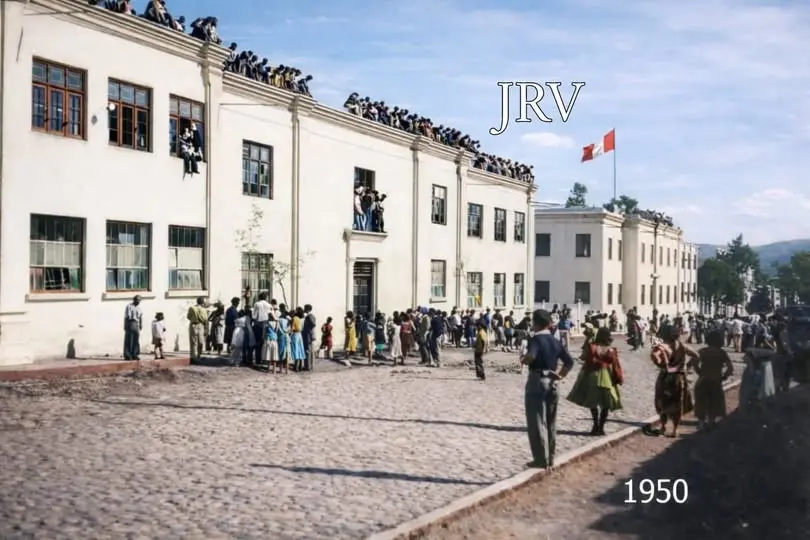
(taken from this source)
2. The “Arequipazo” (2002): Defending Regional Dignity
Leaping into contemporary history, the Arequipazo of June 2002 proved that this revolutionary spirit remained completely intact in the 21st century.
- The Motive: President Alejandro Toledo’s government attempted to privatize the southern electric companies (Egasa and Egesur) and hand them over to a foreign transnational. Toledo had previously signed a campaign document explicitly promising not to privatize the south’s electricity. The people saw this as a treacherous betrayal and a direct insult to their sovereignty.
- The Total Strike: All of Arequipa declared itself in a state of insurgency. Public transportation halted, markets shut their doors, and thousands of citizens took over the streets. The Plaza de Armas overflowed day after day.
- Civil Resistance: When the government declared a State of Emergency and sent military and police contingents to regain control using tear gas and rubber bullets, the response was relentless. Citizens blocked the Rodríguez Ballón International Airport, tore up the train tracks, and engaged in hand-to-hand combat to defend their streets.
- The Popular Victory: After a week of brutal clashes, and with the city completely ungovernable for the central power in Lima, Toledo’s government was forced to retreat, issue a public apology, sign the “Arequipa Agreement,” and permanently cancel the privatization.
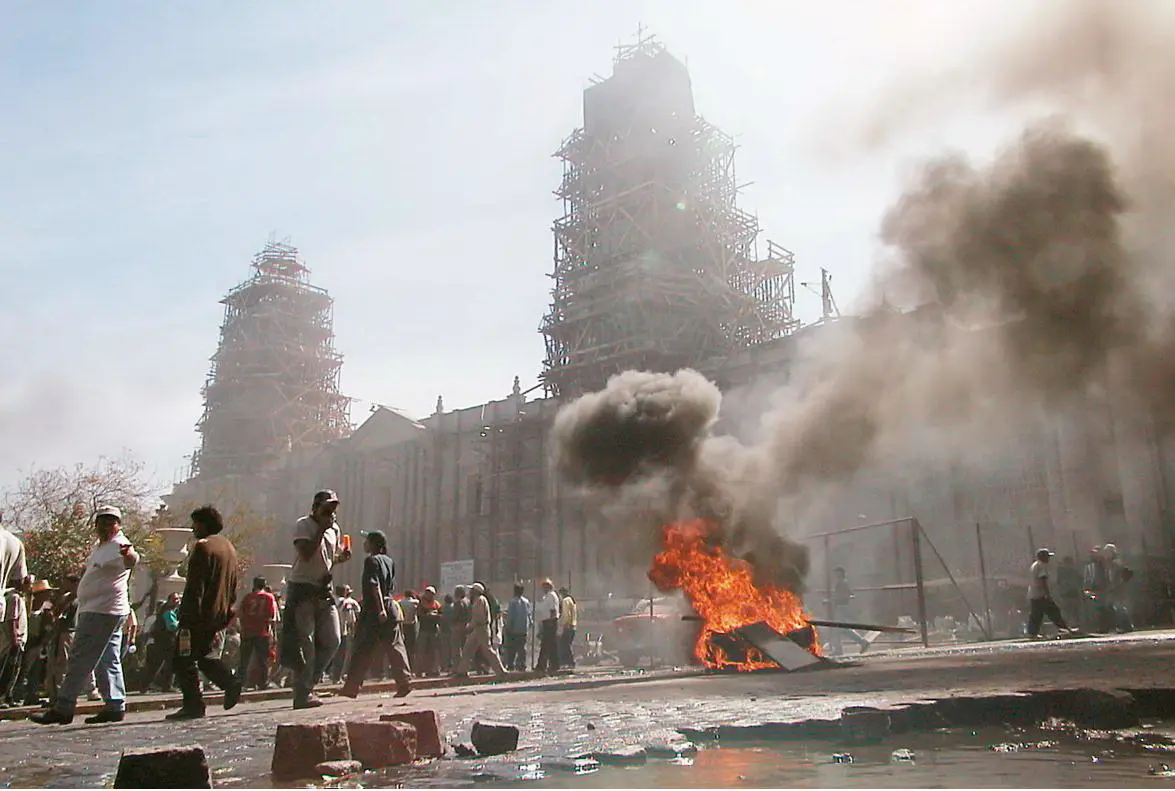 (taken from this source
3. Arequipa and the War with Chile: A Complex Story of Sacrifice and Frustration
Regarding the War of the Pacific (1879-1883), Arequipa’s history is painful and sometimes misunderstood in the capital, but it is deeply nuanced and perfectly reflects its combative character.
- The Contribution of Blood and Resources: From the outbreak of the war, the Arequipa region was the economic backbone of the south. Thousands of young men left its quarries and countryside to form entire battalions (like the famous “Hunters of the Andes”). Arequipeños gave up their jewelry, silver, and wealth to finance the uniforms, horses, and weapons of the armies that fought in Pisagua, San Francisco, Tarapacá, and the heroic defense of Arica. The Arequipa Battalion was decimated defending the homeland.
- The Last Bastion of Resistance (1883): Towards the end of the war, with Lima occupied by Chilean forces, Arequipa became the provisional capital of Peru under the command of Rear Admiral Lizardo Montero. The city housed an army of thousands of national guards (armed Arequipean civilians) completely ready to lay down their lives defending their home, stockpiling self-made cannons and ammunition.
- The Tragedy of the Non-Battle: When the heavily armed and numerically superior Chilean army advanced, despair set in. Montero, realizing that a battle in the streets would mean the total destruction and burning of the city with no real chance of victory, decided to retreat the official army toward Puno to join Bolivian forces.
- The Fury of the People: This order triggered a massive mutiny from the Arequipeño people. The citizens, enraged because they wanted to fight and refused to surrender, rebelled against Montero himself, branding him a coward. Shootouts erupted in the streets, and Peruvian officers were killed in the chaos born of the people’s frustrated desire to defend their land. Ultimately, faced with total anarchy and the abandonment of official troops, local authorities had to sign a peaceful occupation treaty in Paucarpata to avoid a useless massacre of unarmed civilians. The Chileans occupied the city, but the spirit of the common Arequipeño was always to break ranks and fight.
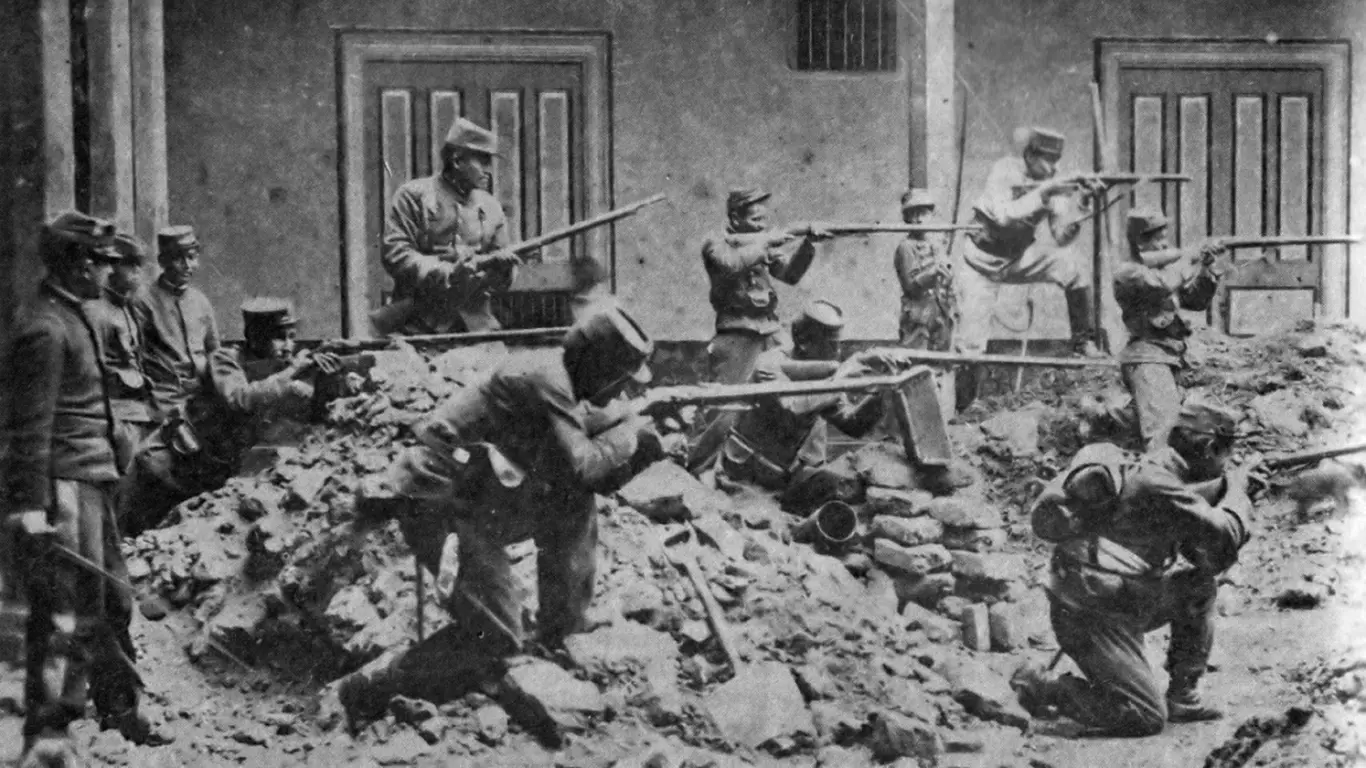 (taken from this source
4. The 2001 Earthquake: Resilience Against Nature
Arequipa’s bravery is demonstrated not only against armies but against the sheer fury of the earth. Sitting in a highly seismic zone, the city has been destroyed and rebuilt from its ashes countless times (1582, 1600, 1687, 1868, etc.).
- On June 23, 2001, an 8.4 magnitude earthquake devastated southern Peru. The historic towers of the Cathedral collapsed, hundreds of ancestral sillar mansions were reduced to rubble, and the city’s infrastructure failed. But the people’s response was neither paralysis nor prolonged mourning. Within days, brigades of everyday citizens, university students, and laborers were out clearing the heavy sillar stones from the streets and rebuilding their homes. Shortly after, the towers of the Cathedral were resurrected, identical to before, standing tall as the ultimate symbol that absolutely nothing can break the White City.
For all these reasons, the Arequipeño passport (a symbolic document of regional pride), the city’s anthem that sings of “Arequipa, the land of the free…”, and their ever-rebellious spirit are the living proof of a society that has never, and will never, accept staying on its knees in the face of abusive power or tragedy.
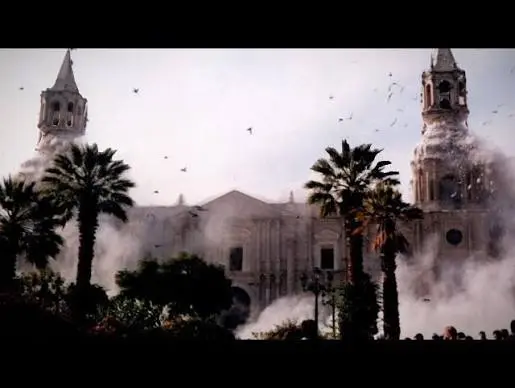
(taken from this source video
To honor and remember this towering legacy, I have captured multiple videos of the Misti volcano—the silent, eternal witness to Arequipa’s bravery. Through these clips, you can admire the city’s ultimate symbol from multiple angles. I hope you like it 😃.